RM174.45 juta perkasa pelancongan, budaya Sabah (Dwibahasa)
Versi Bahasa Melayu
KOTA KINABALU: Kerajaan Negeri memperuntukkan sebanyak RM174.45 juta kepada Kementerian Pelancongan, Kebudayaan dan Alam Sekitar (KePKAS) serta jabatan dan agensinya tahun ini bagi memperkukuh industri pelancongan dan memelihara warisan budaya Sabah.
Ketua Menteri, Datuk Seri Panglima Haji Hajiji Haji Noor, berkata selain merangsang ekonomi negeri, inisiatif itu turut menyumbang kepada usaha pemuliharaan nilai warisan budaya serta kelestarian alam semula jadi.
Menurutnya, kerajaan negeri turut memperuntukkan RM38.70 juta bagi menambah baik fasiliti dan infrastruktur sedia ada, termasuk pelaksanaan beberapa projek utama tahun ini.
Antara projek terbabit ialah menaik taraf kemudahan di Petagas War Memorial Park, pembinaan Muzium Etnik Ranau, menaik taraf Pusat Kebudayaan Penampang serta peningkatan produk pelancongan di Pusat Kebudayaan Murut Tenom.
“Kerajaan juga akan meneruskan inisiatif memperkasa warisan dan budaya Sabah melalui pembangunan Pemetaan Budaya Etnik 2026-2030 bagi memastikan kepelbagaian etnik didokumentasi secara sistematik untuk rujukan generasi kini dan akan datang,” katanya.
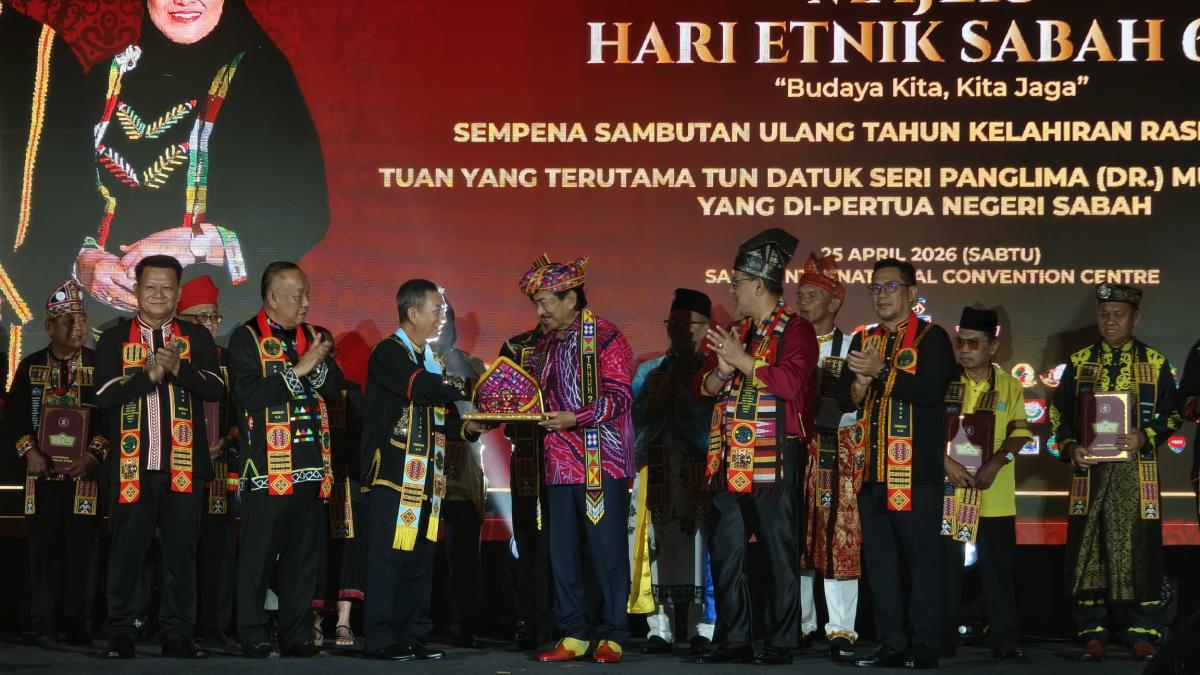
Beliau berkata demikian pada Majlis Hari Etnik Sabah sempena Sambutan Ulang Tahun Kelahiran Rasmi ke-75 Yang di-Pertua Negeri Sabah di Pusat Konvensyen Antarabangsa Sabah (SICC), pada Khamis.
Ucapannya dibacakan oleh Timbalan Ketua Menteri I/Menteri Kerja Raya dan Utiliti Negeri, Datuk Seri Panglima Dr. Joachim Gunsalam. Yang di-Pertua Negeri, Tun Datuk Seri Panglima (Dr) Musa Haji Aman berkenan melancarkan Majlis Hari Etnik Sabah.
Hajiji berkata, usaha berterusan itu penting bagi memastikan budaya tempatan kekal relevan dalam dunia yang sentiasa berubah, di samping dipelihara oleh generasi muda.
Beliau berharap persatuan etnik di negeri ini terus membangunkan kebudayaan, adat dan bahasa masing-masing agar tidak pupus, selain memperkasa produk budaya sebagai tarikan pelancong.
“Usaha ini diyakini mampu membantu meningkatkan kehadiran pelancong sekali gus mencapai sasaran empat juta pelancong ke Sabah tahun ini,” katanya.
Menurutnya, penganjuran Hari Etnik Sabah menjadi wadah meraikan kepelbagaian budaya dan warisan etnik, selain simbol keharmonian serta perpaduan rakyat negeri ini.
Katanya, penganjuran yang memasuki tahun keenam itu turut menampilkan elemen baharu iaitu perarakan budaya yang menghimpunkan pelbagai etnik dari seluruh Sabah.
“Bertepatan dengan tema sambutan tahun ini, ‘Budaya Kita, Kita Jaga’, ia menuntut tanggungjawab bersama untuk memelihara dan memulihara budaya sebagai asas jati diri, perpaduan sosial dan kebanggaan rakyat,” katanya.
Beliau turut merakamkan penghargaan kepada semua pihak termasuk badan kebudayaan berasaskan etnik dan penggiat seni yang menjayakan sambutan berkenaan.
“Hari Etnik bukan sahaja platform memperkenalkan khazanah warisan etnik, malah membuktikan perbezaan agama, budaya dan latar belakang bukan jurang pemisah, sebaliknya kekuatan yang memperkayakan identiti Sabah serta memperkukuh perpaduan rakyat,” katanya.
Tamat
English version
KOTA KINABALU: The State Government has allocated RM174.45 million to the Ministry of Tourism, Culture and Environment (KePKAS) and its departments and agencies this year to strengthen the tourism industry and preserve Sabah’s cultural heritage.
Chief Minister Datuk Seri Panglima Haji Hajiji Haji Noor said that, in addition to stimulating the state’s economy, the initiative also contributes to efforts in preserving cultural heritage values and ensuring environmental sustainability.
He said the state government has also allocated RM38.70 million to upgrade existing facilities and infrastructure, including the implementation of several key projects this year.
Among the projects are the upgrading of facilities at Petagas War Memorial Park, the construction of the Ranau Ethnic Museum, the upgrading of the Penampang Cultural Centre, and enhancements to tourism products at the Murut Cultural Centre in Tenom.
“The government will also continue initiatives to strengthen Sabah’s heritage and culture through the development of the Ethnic Cultural Mapping 2026–2030 to ensure the state’s ethnic diversity is systematically documented for reference by present and future generations,” he said.
He said this at the Sabah Ethnic Day celebration held in conjunction with the 75th Official Birthday celebration of the Yang di-Pertua Negeri Sabah at the Sabah International Convention Centre (SICC) on Thursday.
His speech was delivered by Deputy Chief Minister I/State Works and Utilities Minister Datuk Seri Panglima Dr Joachim Gunsalam.
Yang di-Pertua Negeri, Tun Datuk Seri Panglima (Dr) Musa Haji Aman, officiated the Sabah Ethnic Day event.
Hajiji said the continuous efforts are important to ensure that local cultures remain relevant in an ever-changing world, while also being preserved by the younger generation.
He expressed hope that ethnic associations in the state will continue to develop their respective cultures, customs and languages so that they do not become extinct, while also strengthening cultural products as tourist attractions.
“These efforts are expected to help increase tourist arrivals and achieve the target of four million visitors to Sabah this year,” he said.
He added that the Sabah Ethnic Day celebration serves as a platform to celebrate the diversity of cultural and ethnic heritage, as well as a symbol of harmony and unity among the people of the state.
He said the event, now in its sixth year, also features a new element—a cultural parade bringing together various ethnic groups from across Sabah.
“In line with this year’s theme, ‘Our Culture, Our Responsibility,’ it calls for collective responsibility to preserve and conserve culture as the foundation of identity, social unity and pride of the people,” he said.
He also expressed appreciation to all parties, including ethnic-based cultural organisations and arts practitioners, who contributed to the success of the celebration.
“Ethnic Day is not only a platform to showcase the treasures of ethnic heritage, but also proves that differences in religion, culture and background are not dividing lines, but strengths that enrich Sabah’s identity and strengthen the unity of its people,” he said.
Ends