Sabah mahu maksimumkan nilai sumber minyak dan gas (Dwibahasa)
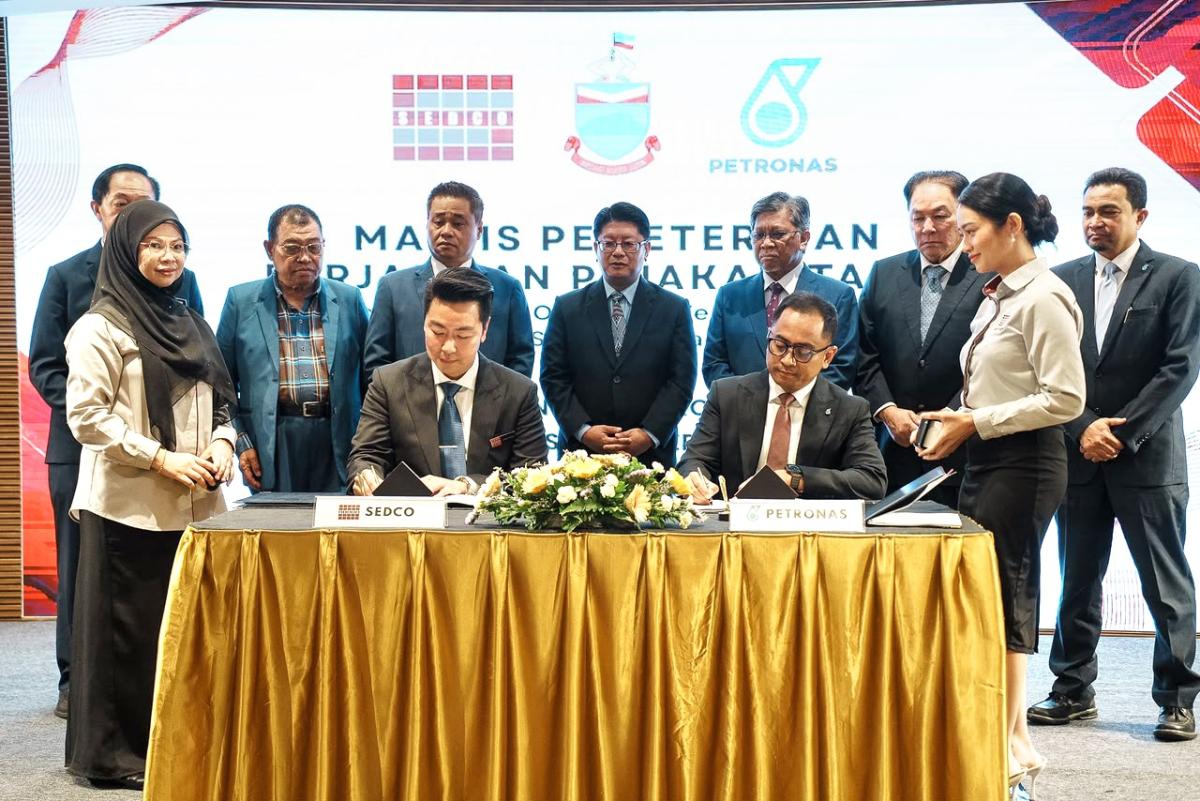
KOTA KINABALU: Kerajaan Sabah mahu memastikan pembangunan industri minyak dan gas bukan sekadar berasaskan penerokaan dan pengeluaran sumber, sebaliknya mampu mewujudkan nilai ekonomi lebih besar serta manfaat berpanjangan kepada negeri dan rakyatnya.
Ketua Menteri, Datuk Seri Panglima Haji Hajiji Haji Noor, berkata persoalan lebih penting bukan semata-mata berapa banyak sumber yang dimiliki Sabah, tetapi sejauh mana nilai dapat diwujudkan daripada sumber berkenaan untuk manfaat negeri dan rakyat.
Beliau berkata, industri minyak dan gas merangkumi keseluruhan rantaian nilai, daripada infrastruktur dan perkhidmatan sokongan kepada aktiviti pertengahan dan hiliran, pembangunan vendor, teknologi, tenaga kerja berkemahiran, pelaburan serta aktiviti ekonomi yang berkembang dalam lingkungan industri itu.
“Sudah tentu, kita mahu supaya perkembangan industri ini dapat mewujudkan limpahan ekonomi yang lebih luas kepada Sabah,” katanya pada Majlis Pemeteraian Perjanjian Pajakan Tanah Projek Sabah Oil & Gas Terminal (SOGT) dan Projek Sabah-Sarawak Gas Pipeline (SSGP) antara Perbadanan Pembangunan Ekonomi Sabah (SEDCO) dan PETRONAS di Kimanis Ballroom, Hyatt Regency Kinabalu, hari ini.
Ucapan beliau dibacakan oleh Timbalan Ketua Menteri III merangkap Menteri Pembangunan Perindustrian, Keusahawanan dan Pengangkutan Negeri, Datuk Ewon Benedick.
Hajiji berkata, perkembangan aktiviti eksplorasi serta penemuan sumber baharu dalam beberapa tahun kebelakangan ini membayangkan prospek pembangunan industri minyak dan gas yang lebih besar kepada Sabah pada tahun mendatang.
Katanya, infrastruktur SOGT dan SSGP perlu dilihat bukan sekadar berdasarkan fungsi operasinya masing-masing, tetapi sebagai sebahagian daripada infrastruktur penting yang menyokong ekosistem pertumbuhan ekonomi negeri.
Beliau berkata, kedudukan infrastruktur itu berpotensi membuka ruang kepada perkembangan aktiviti ekonomi dan industri di kawasan sekitarnya, khususnya koridor Kimanis hingga Sipitang yang mempunyai potensi untuk terus berkembang sebagai kawasan pertumbuhan penting Sabah.
Sehubungan itu, katanya, infrastruktur yang dibangunkan perlu dimanfaatkan bukan sahaja untuk keperluan semasa, malah bagi menyokong peluang pelaburan, pembangunan industri dan peningkatan sosioekonomi pada masa hadapan.
Hajiji berkata, kerajaan negeri amat menghargai sumbangan, pelaburan dan kepakaran PETRONAS yang sekian lama menjadi sebahagian daripada perkembangan industri minyak dan gas tempatan serta rakan pembangunan Sabah.
Katanya, kerajaan negeri mahu melihat lebih banyak manfaat dan ruang kepada penyertaan tempatan, termasuk membolehkan syarikat serta vendor Sabah berkembang daripada sekadar melaksanakan kerja sokongan kepada membina keupayaan lebih kukuh dari segi teknikal, pengurusan, teknologi dan modal.
Beliau berkata, syarikat tempatan perlu mempunyai kapasiti untuk mengambil bahagian dalam peluang lebih besar dan bernilai tinggi dalam rantaian industri, manakala PETRONAS mempunyai peranan penting untuk bersama-sama kerajaan negeri merealisasikan aspirasi berkenaan.
Katanya, pada masa sama, pembangunan industri perlu disertai pembangunan modal insan dengan memastikan anak Sabah diberikan peluang memperoleh kemahiran, pengalaman dan pendedahan yang diperlukan untuk membina kerjaya dalam sektor minyak dan gas, khususnya dalam bidang teknikal dan profesional.
Hajiji turut menegaskan bahawa SEDCO perlu terus berkembang daripada sekadar pemilik dan pengurus aset kepada pemudah cara pelaburan serta rakan strategik industri, termasuk lebih proaktif mengenal pasti aset, peluang dan ruang kerjasama yang boleh dibangunkan bersama pemain industri.
Katanya, usaha itu merangkumi peluang berkaitan tanah, infrastruktur, pembangunan komersial dan bentuk kerjasama lain yang mampu memberikan manfaat bersama serta pulangan munasabah kepada negeri.
Beliau berkata, pemeteraian perjanjian pajakan tanah antara SEDCO dengan PETRONAS itu merupakan satu contoh bagaimana pengurusan aset tanah negeri dapat disusun secara lebih teratur, memberikan kepastian kepada pengguna dan pada masa sama memastikan kepentingan komersial negeri terus dipelihara.
Hajiji berharap kerjasama SEDCO-PETRONAS terus berkembang daripada hubungan berasaskan transaksi kepada hubungan strategik yang lebih luas dan saling memberikan nilai, sekali gus memastikan pengurusan serta pembangunan sumber dan aset negeri diterjemahkan kepada nilai ekonomi yang nyata dan berpanjangan.
Tamat
KOTA KINABALU: The Sabah Government wants to ensure that the development of the oil and gas industry goes beyond exploration and production to generate greater economic value and long-term benefits for the state and its people.
Chief Minister Datuk Seri Panglima Haji Hajiji Haji Noor said the more important question was not merely how much oil and gas resources Sabah possessed, but how much value could be derived from these resources for the benefit of the state and its people.
He said the oil and gas industry encompassed the entire value chain, from infrastructure and support services to midstream and downstream activities, vendor development, technology, skilled manpower, investment and other economic activities associated with the industry.
"Certainly, we want the growth of this industry to generate wider economic spillover benefits for Sabah," he said at the signing ceremony of the Land Lease Agreements for the Sabah Oil and Gas Terminal (SOGT) and Sabah-Sarawak Gas Pipeline (SSGP) projects between the Sabah Economic Development Corporation (SEDCO) and PETRONAS at the Kimanis Ballroom, Hyatt Regency Kinabalu, here today.
His speech was delivered by Deputy Chief Minister III/State Minister of Industrial Development, Entrepreneurship and Transport Datuk Ewon Benedick.
Hajiji said the expansion of exploration activities and discoveries of new resources in recent years pointed to greater prospects for the development of Sabah's oil and gas industry in the years ahead.
He said the SOGT and SSGP infrastructure should not be viewed solely in terms of their respective operational functions, but also as essential infrastructure supporting the state's economic growth ecosystem.
The strategic locations of these facilities could open up opportunities for further economic and industrial activities in surrounding areas, particularly along the Kimanis Sipitang corridor, which has the potential to develop further into a major growth area in Sabah.
In this regard, he said the infrastructure developed must be utilised not only to meet present needs but also to support future investment opportunities, industrial development and socioeconomic advancement.
Hajiji said the State Government greatly appreciated PETRONAS' contributions, investments and expertise, having long played an important role in the development of the local oil and gas industry and served as a development partner to Sabah.
He said the State Government wanted to see greater benefits and opportunities for local participation, including enabling Sabah-based companies and vendors to progress beyond providing support services towards building stronger technical, management, technological and financial capabilities.
Local companies must have the capacity to participate in larger and higher-value opportunities within the industry's value chain, while PETRONAS has an important role to play alongside the State Government in realising this aspiration, he said.
At the same time, he said industrial development must go hand in hand with human capital development by ensuring that Sabahans are given opportunities to acquire the skills, experience and exposure needed to build careers in the oil and gas sector, particularly in technical and professional fields.
Hajiji also stressed that SEDCO must continue to evolve beyond its role as an asset owner and manager to become an investment facilitator and strategic industry partner.
This included taking a more proactive approach in identifying assets, opportunities and potential areas of collaboration that could be jointly developed with industry players.
He said these efforts should encompass opportunities involving land, infrastructure, commercial development and other forms of collaboration that could deliver mutual benefits and reasonable returns to the state.
He said the signing of the land lease agreements between SEDCO and PETRONAS was an example of how the management of state land assets could be structured more systematically, providing certainty to users while ensuring that the state's commercial interests continued to be safeguarded.
Hajiji expressed hope that the SEDCO-PETRONAS collaboration would continue to evolve beyond a transactional relationship into a broader strategic partnership that delivers mutual value.
This would help ensure that the management and development of the state's resources and assets translate into tangible and lasting economic value.
Ends